Website Examples

10 Pest Control Website Examples & Design Ideas

Looking for inspiration for a pest control website? These real pest control company websites show different ways to organize pest services, explain treatment plans, display reviews, communicate service areas, promote inspections, clarify pricing, and build trust with homeowners and businesses.

Quick Take

What Makes a Great Pest Control Website?

01

Easy Pest Identification

Visitors often arrive with a specific pest problem, so ants, termites, rodents, mosquitoes, spiders, roaches, wildlife, and other pests should be easy to find.

02

Strong Trust Signals

Reviews, guarantees, licenses, technician information, years in business, and clear safety messaging help reduce uncertainty.

03

Clear Plans & Pricing

Service plans, inspection details, recurring treatment schedules, pricing guidance, and guarantees can make the buying decision easier.

04

Fast Next Steps

Free inspections, quote requests, same-day service, phone calls, and online scheduling should be easy to reach.

Real-World Inspiration

Pest Control Website Examples Worth Studying

These examples show different approaches to local pest expertise, treatment plans, pricing, pest libraries, reviews, guarantees, service areas, same-day service, multi-location businesses, and inspection conversion.

01

Axcel Pest Control

Residential Pest Control

Visit Website →
Best Pricing Transparency & Service Process
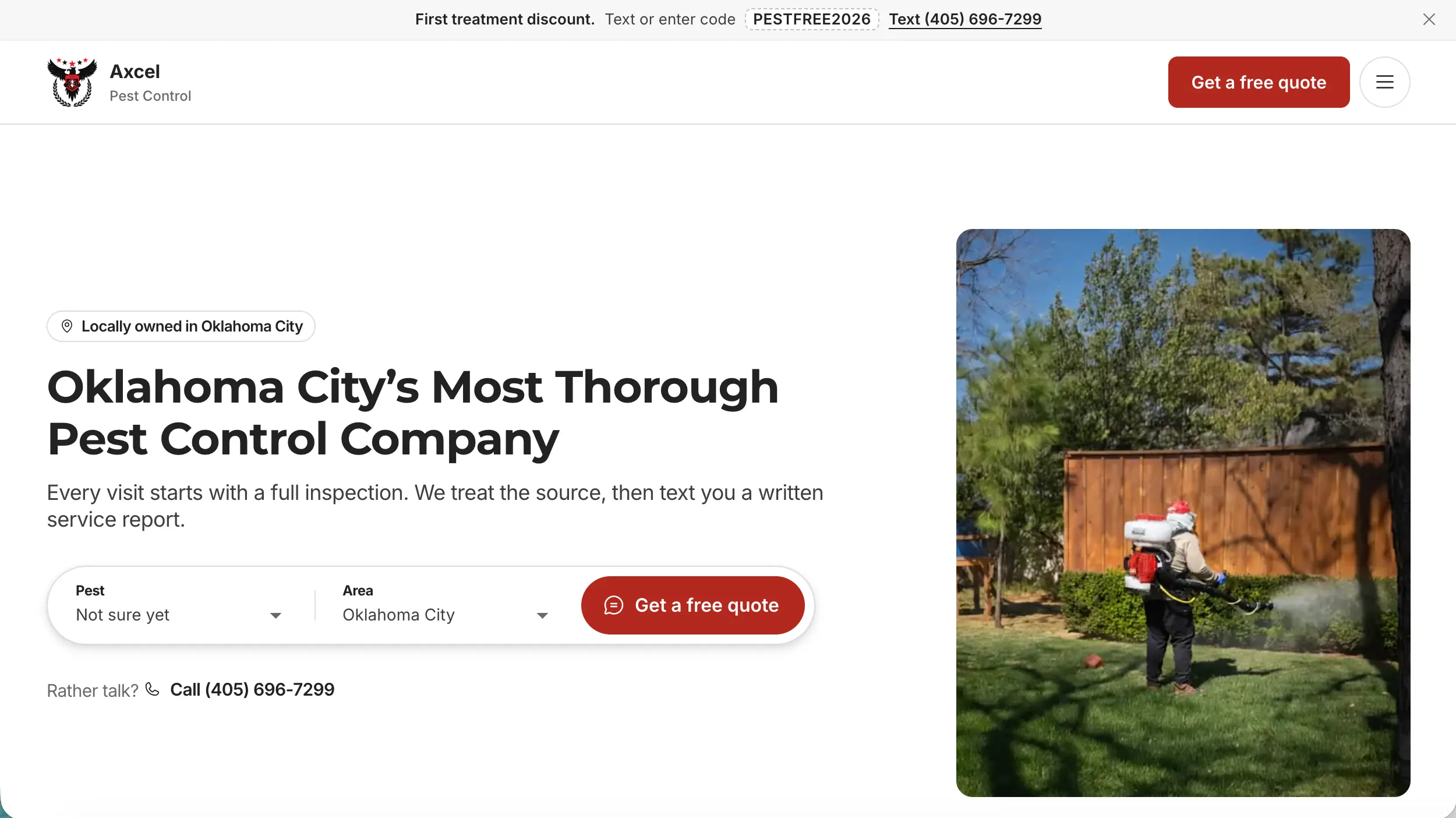
Axcel Pest Control website example
Axcel Pest Control

Why it works

Axcel Pest Control removes a lot of uncertainty from the buying process by explaining service plans, what visits include, and how ongoing pest protection works rather than asking visitors to request a quote before learning anything useful.

The website also emphasizes practical customer benefits such as return visits and continuity of service, helping the company compete on the experience rather than simply promising to eliminate pests.
02

Paino Pest Management

Local Pest Management

Visit Website →
Best Eco-Friendly Local Branding
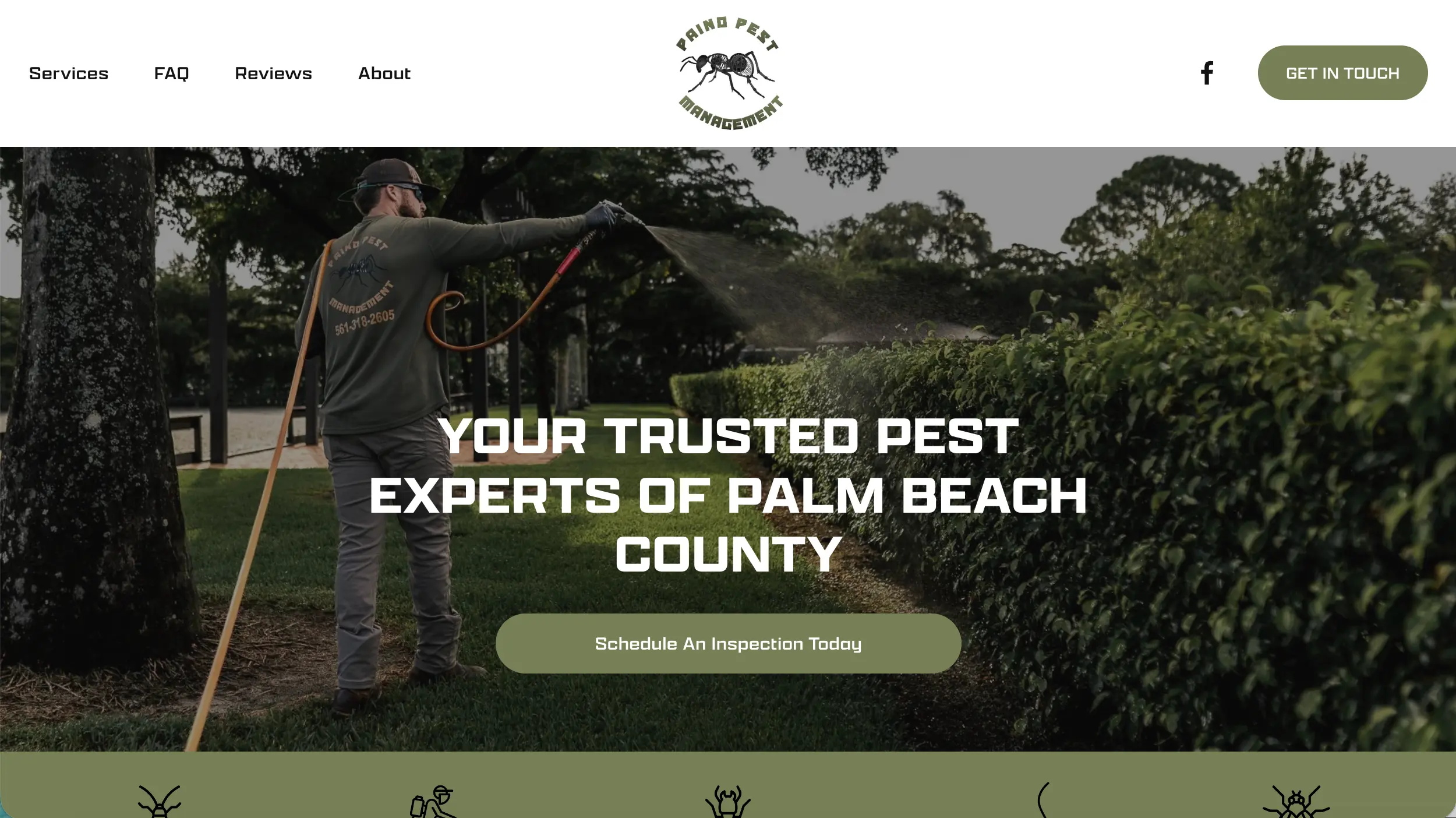
Paino Pest Management website example
Paino Pest Management

Why it works

Paino Pest Management gives the business a recognizable local identity through family-owned positioning, team information, sustainability messaging, and a clearly defined service area.

The site also addresses concerns homeowners may have about treatment around families and pets, while the satisfaction guarantee adds another layer of reassurance before requesting service.

03

Pest Pro Pest Control

Residential & Commercial Pest Control

Visit Website →
Best Reviews & Award-Based Trust
Pest Pro Pest Control website example
Pest Pro Pest Control

Why it works

Pest Pro Pest Control makes social proof a major part of the website rather than leaving reviews on a separate testimonials page. Awards, customer feedback, industry credibility, and family- and pet-conscious messaging reinforce trust throughout the experience.

The site also explains the process of getting started in a small number of steps, which helps turn a potentially stressful pest problem into a more understandable service decision.

04

Urban Desert Pest Control

Arizona Pest Control

Visit Website →
Best Local Pest Expertise & Regional Positioning
Urban Desert Pest Control website example
Urban Desert Pest Control

Why it works

Urban Desert Pest Control makes its regional expertise visible by focusing on pests and conditions that are especially relevant in the Phoenix area. Scorpions, termites, roaches, rodents, and other desert pest problems become part of the brand positioning.

That local specificity makes the site feel more useful than a generic pest-control template that could belong to a company anywhere in the country.

05

Greenleaf Pest Control

Residential Pest Control

Visit Website →
Best Pest Selector & Same-Day Conversion
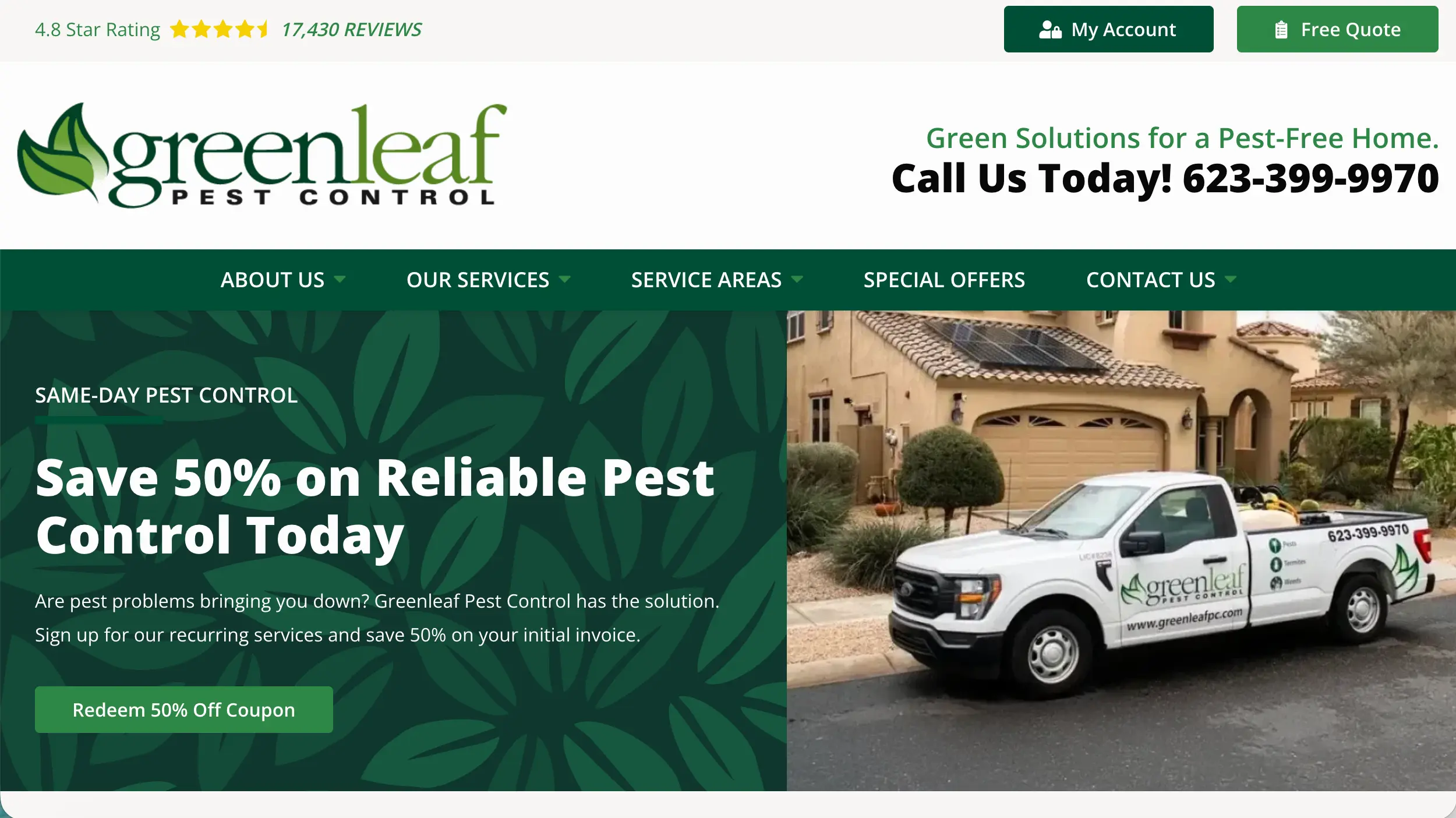
Greenleaf Pest Control website example
Greenleaf Pest Control

Why it works

Greenleaf Pest Control organizes the website around the problem a visitor is experiencing. Pest-specific options help homeowners identify the relevant treatment rather than requiring them to understand the company's internal service structure.

Same-day positioning, visible offers, reviews, and free-estimate calls to action create urgency while still giving visitors useful information before asking them to convert.

06

Rose Pest Solutions

Residential & Commercial Pest Management

Visit Website →
Best Pest Identification & Authority
Rose Pest Solutions website example
Rose Pest Solutions

Why it works

Rose Pest Solutions uses company history, professional expertise, technicians, and pest education to establish authority. The website feels like a substantial pest-management resource rather than only a lead-generation landing page.

Pest identification is especially useful because homeowners may know they have a problem without knowing exactly what species or treatment they need.

07

Arrow Exterminators

Multi-Location Pest Control

Visit Website →
Best Multi-Location & ZIP-Code UX
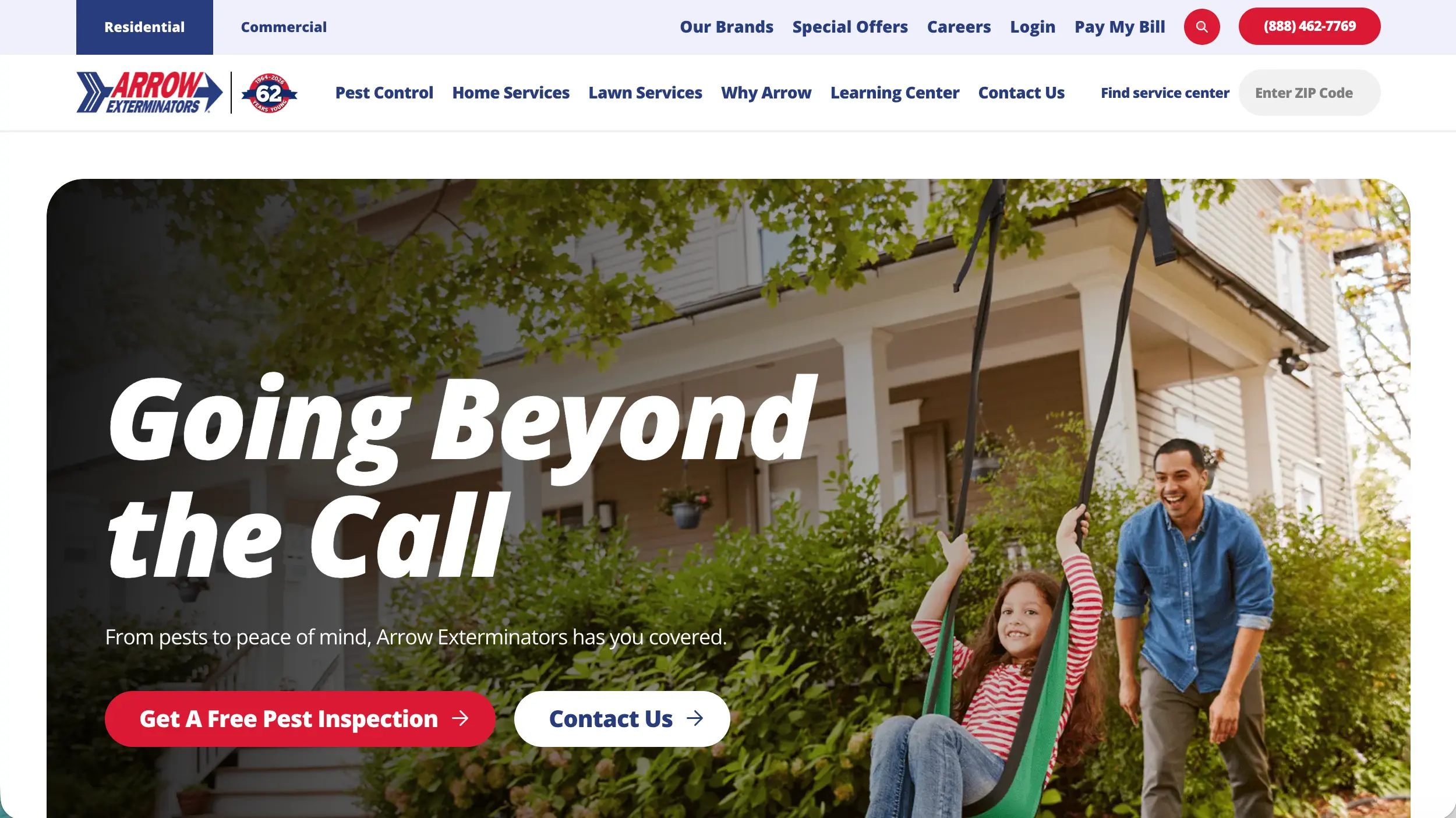
Arrow Exterminators pest control website example
Arrow Exterminators

Why it works

Arrow Exterminators has a much larger geographic footprint than most local pest companies, so the website needs to solve a different navigation problem. Its location and ZIP-code tools help visitors find the appropriate local service operation quickly.

Pest control, termites, mosquitoes, wildlife, inspections, and pest-identification resources are organized without losing the free-inspection conversion path.

08

EcoShield Pest Solutions

Residential Pest Protection

Visit Website →
Best Pest-Control Plan Architecture
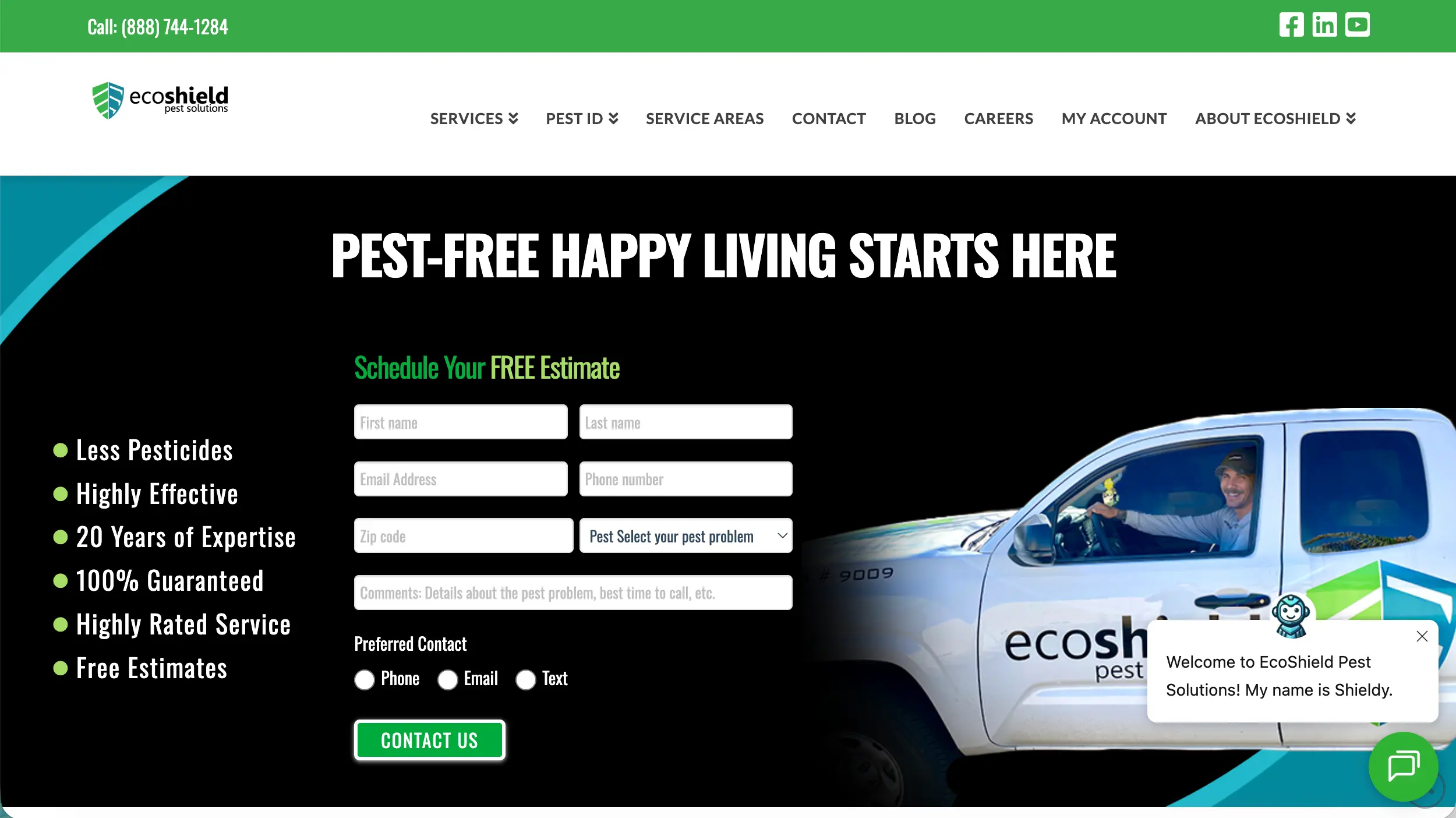
EcoShield Pest Solutions website example
EcoShield Pest Solutions

Why it works

EcoShield turns its major pest-control services into clearly named programs rather than presenting visitors with one long list of treatments. This makes different levels and types of protection easier to distinguish.

Technician screening, safety information, customer reviews, and geographic coverage then reinforce the service architecture with practical trust signals.

09

Kindred Pest Control

Family-Owned Pest Control

Visit Website →
Best Family Brand & Social Proof
Kindred Pest Control website example
Kindred Pest Control

Why it works

Kindred Pest Control emphasizes the identity of the company alongside its service offer. Family ownership, community involvement, customer reviews, and treatment messaging create a more personal alternative to a large national pest brand.

The website also makes responsiveness part of the value proposition, which is important when customers want a pest problem handled quickly.

10

Harvest Valley Pest Control

Residential & Commercial Pest Control

Visit Website →
Best Local Pest Library & Service-Area Clarity
Harvest Valley Pest Control website example
Harvest Valley Pest Control

Why it works

Harvest Valley Pest Control is a good example of a smaller local site that focuses on usefulness rather than unnecessary complexity. Residential and commercial services, inspection calls to action, and geographic coverage are easy to understand.

Its pest library also focuses on pests relevant to the company's actual market, strengthening both local relevance and customer education.

What We Learned

What the Best Pest Control Websites Have in Common

Strong pest control websites help visitors identify the problem, understand the treatment options, confirm local service availability, see evidence of trust, and quickly request an inspection or service.

Pest-Specific Navigation

Ants, termites, rodents, mosquitoes, bed bugs, wildlife, and other common pests should be easy to find from the customer's perspective.

Local Expertise

Regional pests, climate, housing conditions, and service areas can make the content more useful and more credible.

Reviews & Guarantees

Customer feedback, satisfaction guarantees, return visits, and other proof can reduce the perceived risk of hiring a pest company.

Clear Service Plans

Explain one-time treatments, recurring protection, inspections, specialty services, and what customers receive with each option.

Safety Information

When relevant, explain treatment approach, technician practices, and considerations around families, pets, or the environment.

Fast Inspection Path

Free inspections, estimates, phone calls, scheduling, and same-day service should be easy to reach on both desktop and mobile.

Building Your Own?

How to Build a Pest Control Website Like These

A strong pest control website should start with the customer's problem, show that the company serves their area, explain the available solutions, prove credibility, and make it easy to request help.

1

Start With the Pest

Organize important content around the pests customers are trying to identify or remove.

2

Explain the Treatment Options

Clarify one-time treatments, recurring plans, specialty services, inspections, and what the customer should expect.

3

Establish Trust

Use real reviews, guarantees, licensing, technician information, experience, and clear service-area information.

4

Make Help Easy to Request

Keep inspection, quote, call, and scheduling actions visible throughout the site.

Website Structure

What Should a Pest Control Website Template Include?

A pest control website template should make it easy to identify pests, understand available services, verify geographic coverage, see trust signals, and request an inspection, estimate, or appointment.

01

Problem-Focused Hero

Lead with the main service area, the kinds of pest problems handled, and an obvious request service or inspection action.

02

Pest Library

Organize common pests so homeowners and businesses can quickly find information about the problem they are experiencing.

03

Service Plans

Explain recurring pest protection, one-time treatments, specialty services, inspections, and pricing guidance where appropriate.

04

Reviews & Guarantees

Show customer feedback, guarantees, company experience, licensing, and other meaningful trust signals.

05

Service Area

Make cities and regions served easy to understand, especially for companies with several branches or locations.

06

Inspection or Quote Request

End high-intent pages with a simple call, inspection request, estimate form, or scheduling action.

Before You Launch

Pest Control Website Checklist

Use this as a practical starting point when building or reviewing a pest control company website.

Common pests are easy to find
Residential and commercial services are separated when relevant
Service areas are clearly listed
Inspection, estimate, or scheduling action is obvious
Reviews and customer proof are visible
Guarantees are explained clearly when offered
Recurring plans and one-time treatments are easy to distinguish
Safety and treatment information is provided where useful
Technician, licensing, or company credibility is visible
The entire website works well on phones

Frequently Asked Questions

Pest Control Website Design FAQs

What should a pest control website include?

A pest control website should generally include pest-specific services, service areas, company credibility, customer reviews, treatment or plan information, guarantees where applicable, and a clear way to request an inspection or service.

Should a pest control website have separate pages for each pest?

Separate pages can be useful for important pests such as termites, rodents, ants, mosquitoes, roaches, bed bugs, spiders, or wildlife when the company provides meaningfully different information or treatments for each problem.

Should pest control companies show prices online?

Pricing varies by company and infestation, but clear starting prices, plan prices, inspection information, or an explanation of how estimates work can reduce uncertainty for prospective customers.

What trust signals should a pest control website show?

Useful trust signals may include customer reviews, guarantees, licensing, technician information, years in business, professional memberships, safety practices, and real company or team photography.

What is a good call to action for a pest control website?

Common calls to action include Request an Inspection, Get a Free Estimate, Schedule Service, Request Pest Control, or Call Now. The wording should match what actually happens after the customer makes contact.