Website Examples

10 Restaurant Website Examples & Design Ideas

Looking for inspiration for a restaurant website? These real restaurant websites show different ways to present menus, reservations, online ordering, locations, food photography, branding, hours, and the overall dining experience.

Quick Take

What Makes a Great Restaurant Website?

01

Easy Menu Access

Diners should be able to reach the menu quickly without searching through multiple pages or downloading an awkward file.

02

Clear Next Actions

Reservations, ordering, delivery, or directions should be obvious depending on how the restaurant serves guests.

03

Strong Food & Atmosphere Photography

Real photography can communicate the food, space, energy, and price level before a guest ever visits.

04

Practical Information

Address, hours, location details, dietary information, and contact options should be easy to find on mobile and desktop.

Real-World Inspiration

Restaurant Website Examples Worth Studying

These examples were selected because each demonstrates something different, from practical above-the-fold information and online ordering to luxury branding, storytelling, multi-location navigation, and immersive fine dining.

01

Cutler & Co.

Fine Dining

Visit Website →
Best Above-the-Fold Essentials
Cutler and Co restaurant website homepage example
Cutler & Co.

Why it works

Cutler & Co. combines an upscale visual presentation with practical restaurant information. Visitors can quickly understand where the restaurant is located, when it is open, and how to make a reservation.

That balance matters because an elegant restaurant website still has a practical job: helping a guest decide whether, when, and how to visit.

02

Ma‘ono Fried Chicken

Fast Casual

Visit Website →
Best Bold Casual Branding
Maono Fried Chicken restaurant website homepage example
Ma‘ono Fried Chicken

Why it works

Ma‘ono communicates its personality immediately. Bold food imagery, energetic typography, and simple language make the website feel like an extension of the restaurant rather than a generic hospitality template.

Online ordering and location selection remain obvious, so the playful presentation never gets in the way of the actions most visitors actually want to take.

03

Loro Asian Smokehouse & Bar

Multi-Location Casual Dining

Visit Website →
Best Multi-Location Casual Brand
Loro Asian Smokehouse and Bar restaurant website homepage example
Loro Asian Smokehouse & Bar

Why it works

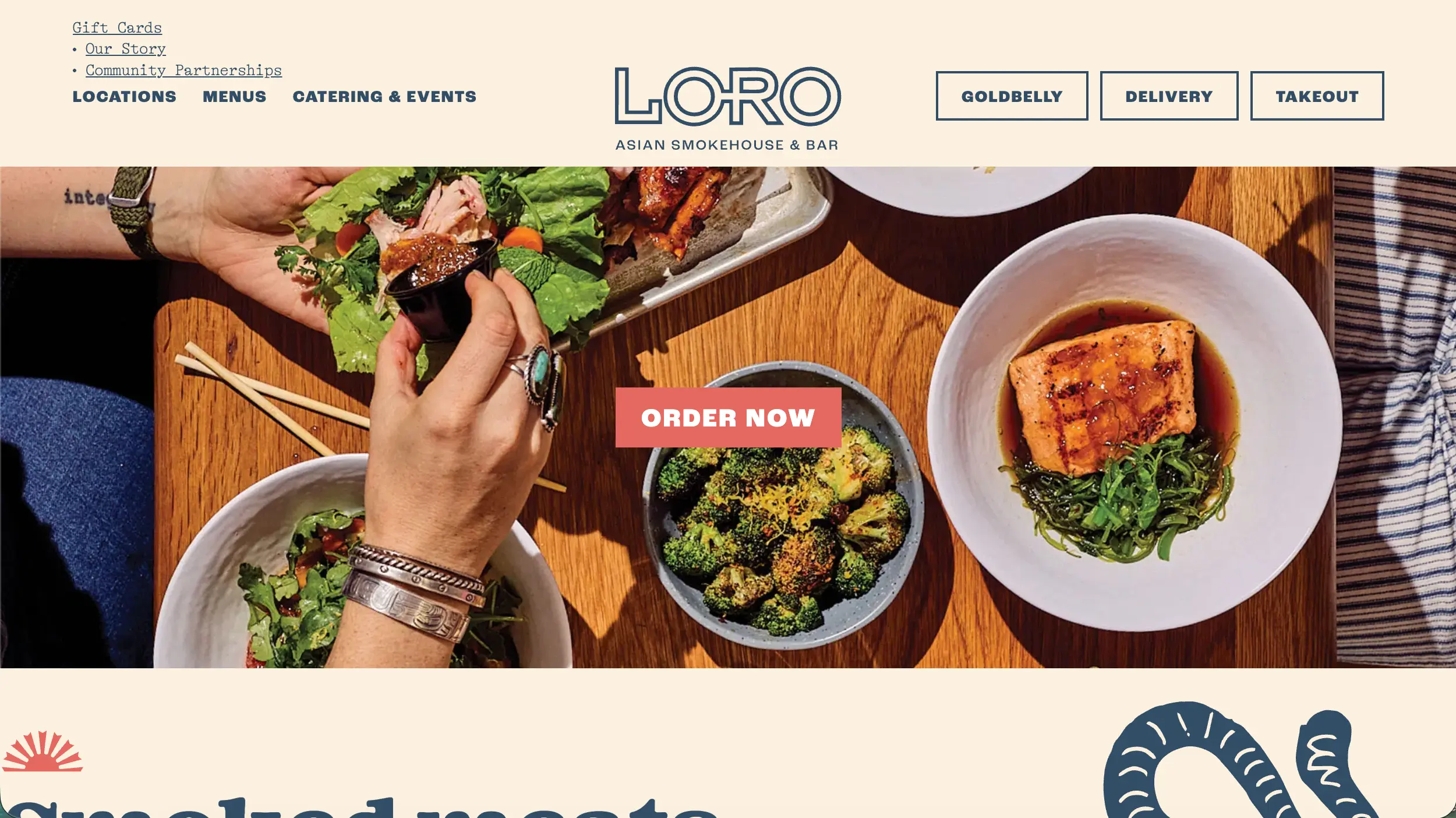
Loro has a distinctive concept and communicates it quickly through its food, atmosphere, and brand language. The website feels relaxed without becoming vague about what the restaurant serves.

Multiple locations are handled with dedicated location information, menus, hours, ordering, and other practical details while the overall brand remains consistent.

04

Dhamaka

Indian Restaurant

Visit Website →
Best Story & Reservation Integration
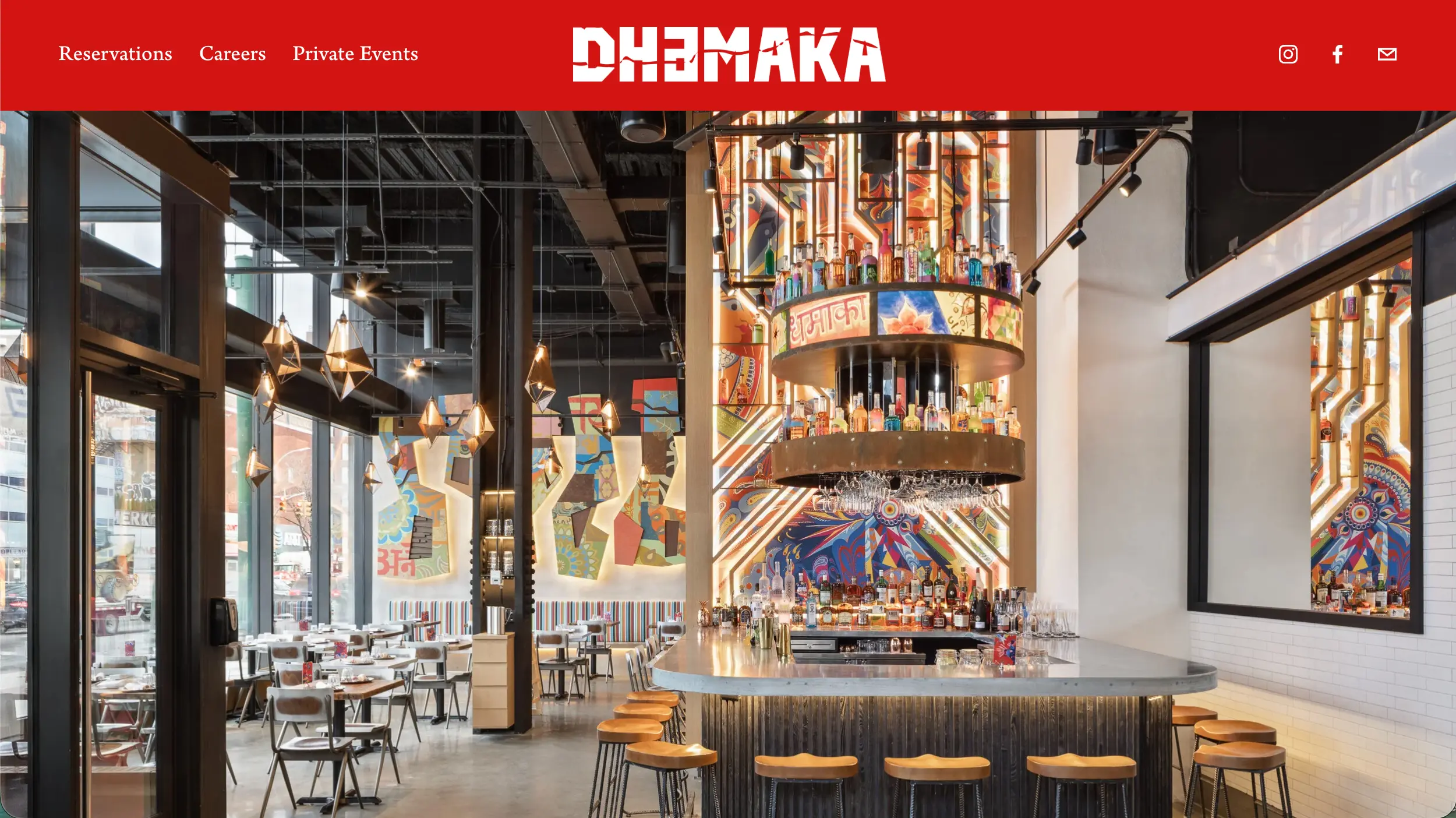
Dhamaka restaurant website homepage example
Dhamaka

Why it works

Dhamaka establishes a clear culinary point of view rather than describing itself with generic restaurant language. The story of the food is closely connected to the menu and overall dining proposition.

Reservations, menu information, recognition, hours, and location details remain part of the same experience, so storytelling supports the decision to visit rather than distracting from it.

05

COTE Korean Steakhouse

Luxury Multi-Location Dining

Visit Website →
Best Multi-City Luxury Website
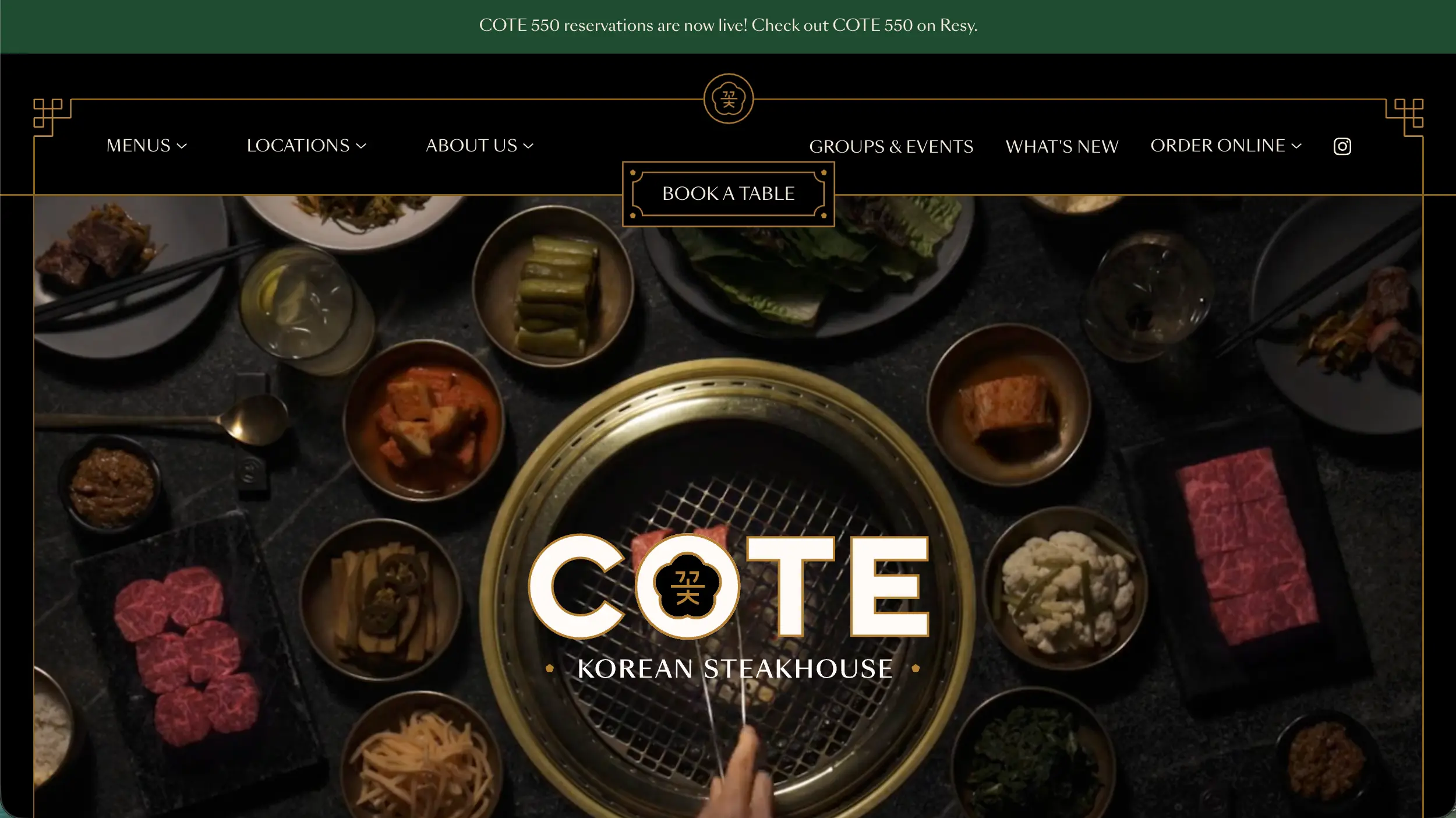
COTE Korean Steakhouse restaurant website homepage example
COTE Korean Steakhouse

Why it works

COTE maintains one distinctive luxury identity while serving diners in multiple cities. Visitors can move from the overall brand into specific locations without losing context.

Location-level information such as addresses, hours, menus, and reservation options keeps the site useful instead of making it feel like a purely promotional restaurant-group website.

06

Via Carota

Italian Restaurant

Visit Website →
Best Illustrated Restaurant Identity
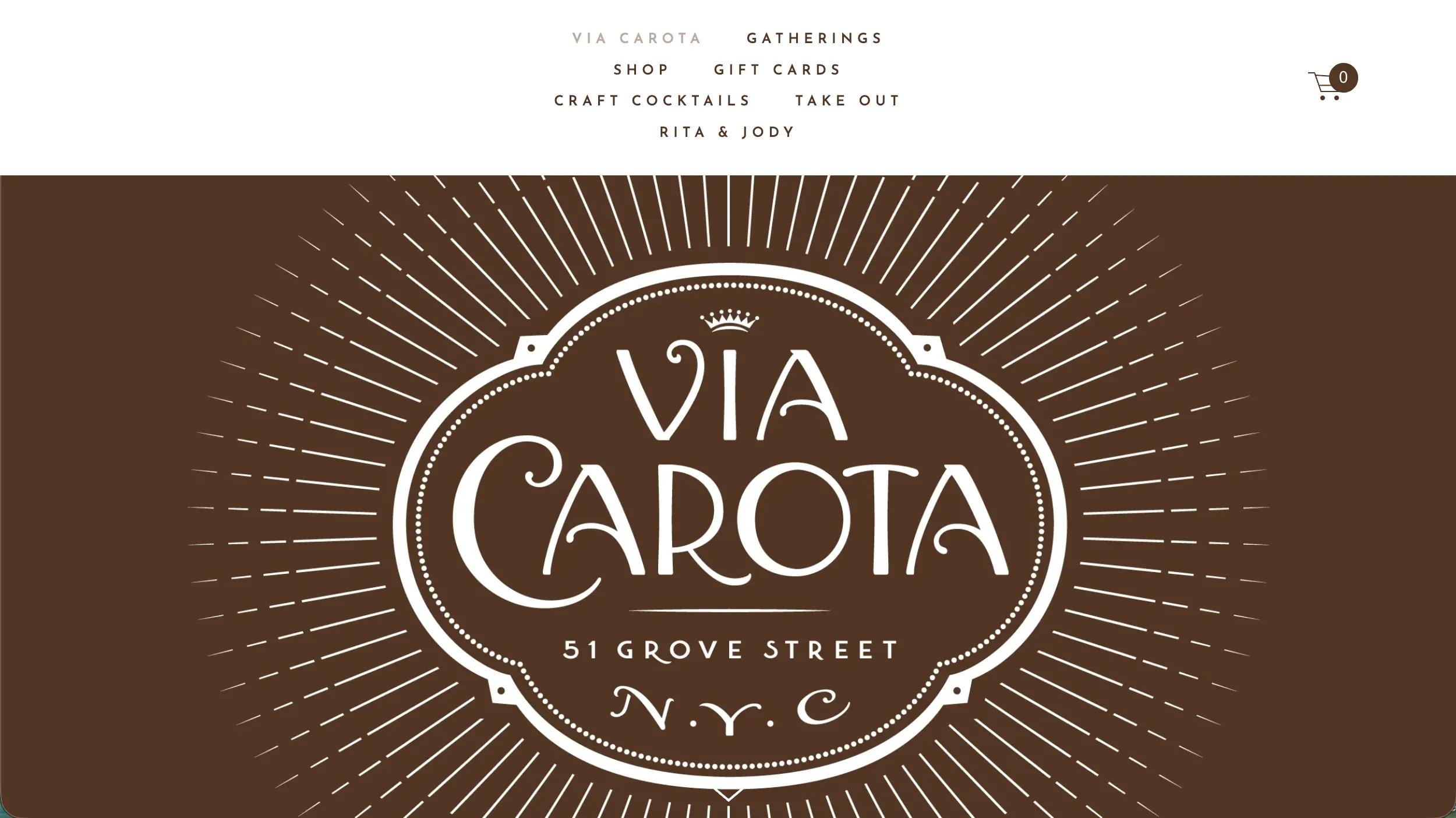
Via Carota restaurant website homepage example
Via Carota

Why it works

Via Carota creates a distinctive identity through illustration, typography, and language rather than depending entirely on giant food photography. The result feels specific to the restaurant instead of following a familiar restaurant template.

Practical information such as the menu, address, hours, and dining policies is still accessible, which keeps the artistic direction from becoming an obstacle.

07

Sweetgreen

Fast Casual & Online Ordering

Visit Website →
Best Online Ordering Experience
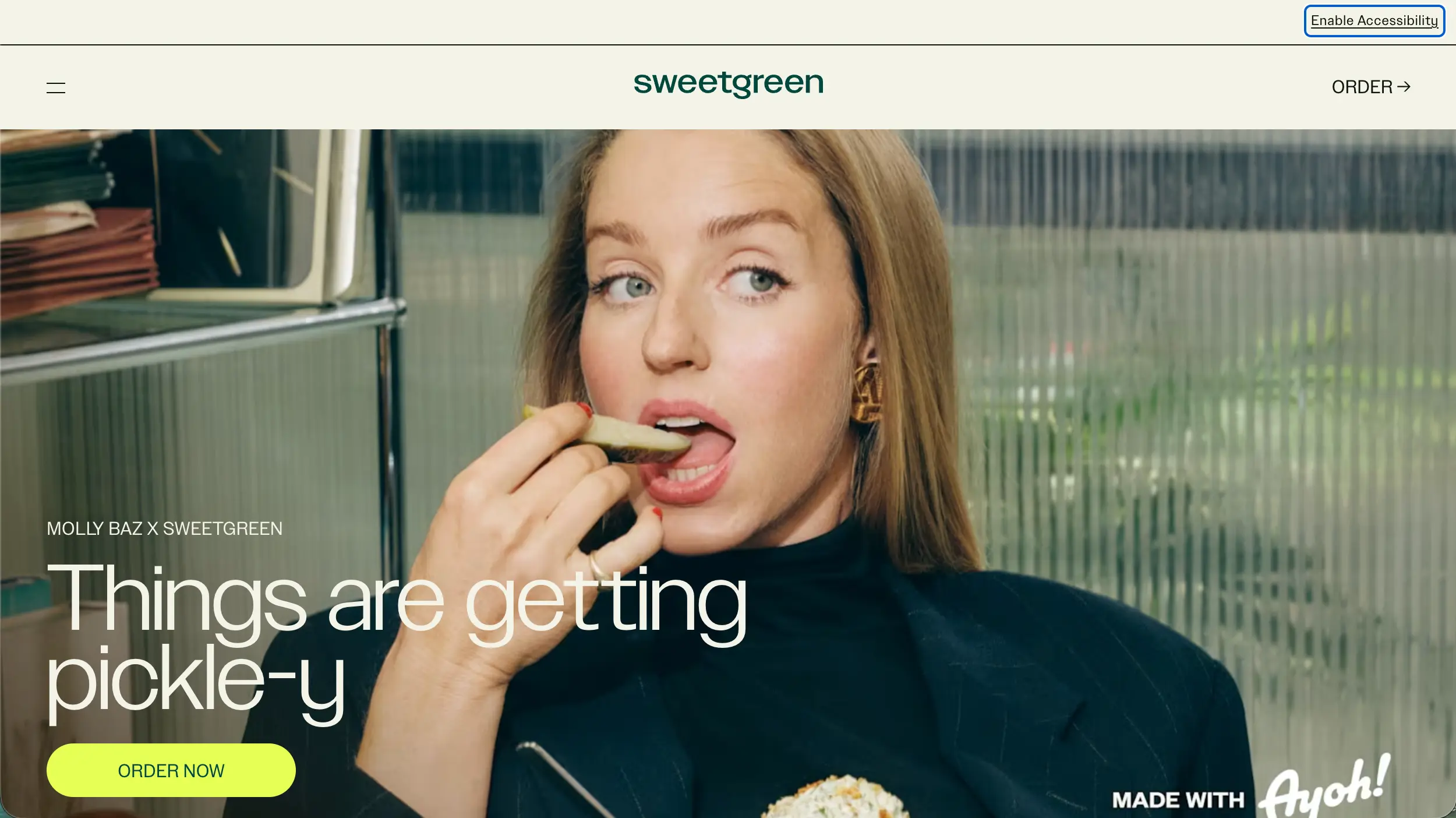
Sweetgreen restaurant website homepage example
Sweetgreen

Why it works

Sweetgreen treats online ordering as a core part of the website rather than a single button added to the navigation. Menu items, ingredients, and ordering actions are closely connected.

Individual location information also combines hours, address, directions, ordering, delivery, and catering, making the website useful before and during the purchase decision.

08

Sarma

Mediterranean Restaurant

Visit Website →
Best Menu & Team Transparency
Sarma restaurant website homepage example
Sarma

Why it works

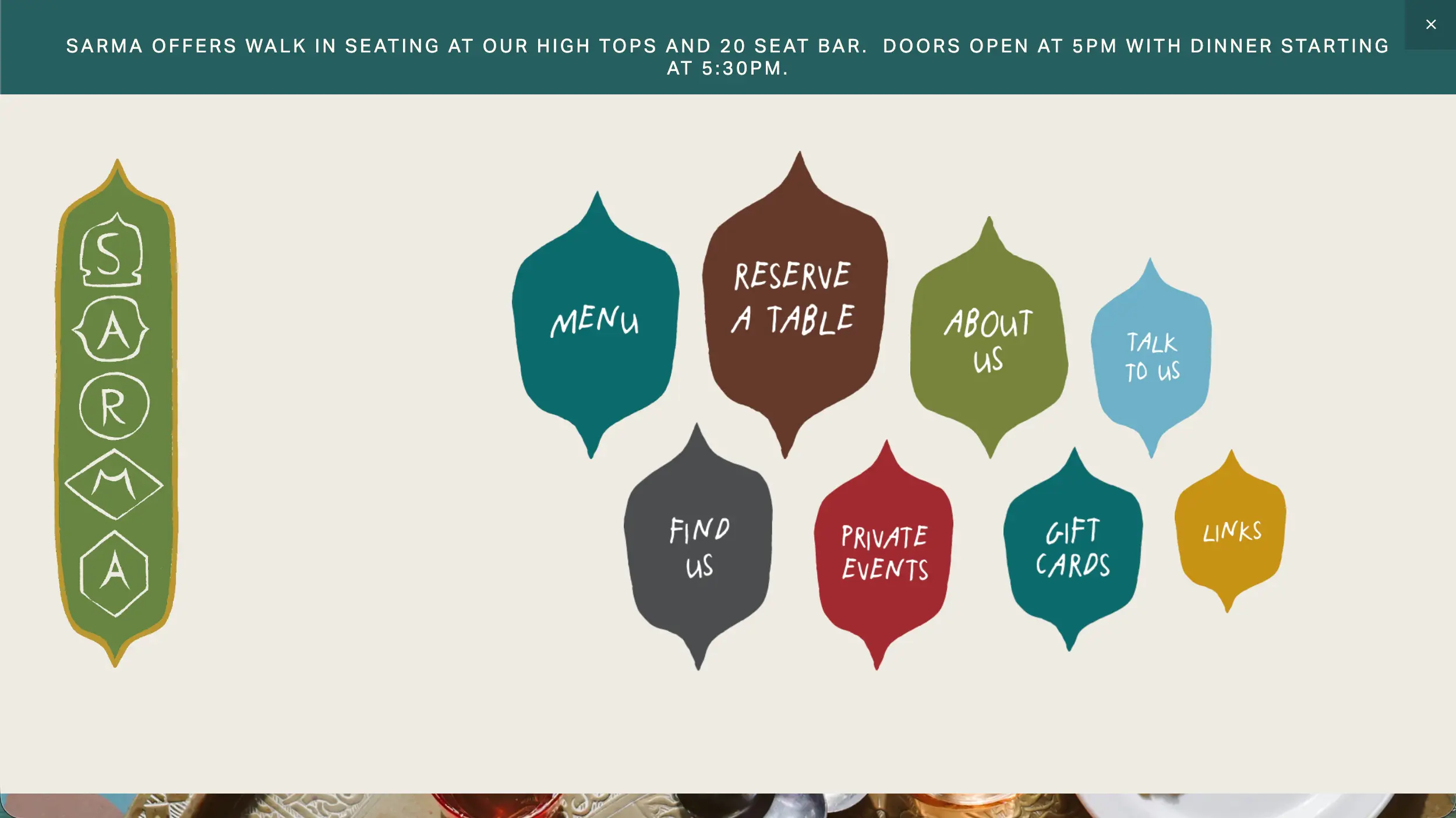
Sarma provides a large amount of useful information directly on the website, including a priced menu, dietary details, hours, reservation information, location, and background on the people behind the restaurant.

Keeping the menu visibly current is especially useful for a restaurant where dishes may change over time.

09

Qissa

Independent Local Restaurant

Visit Website →
Best Small Local Restaurant Website
Qissa restaurant website homepage example
Qissa

Why it works

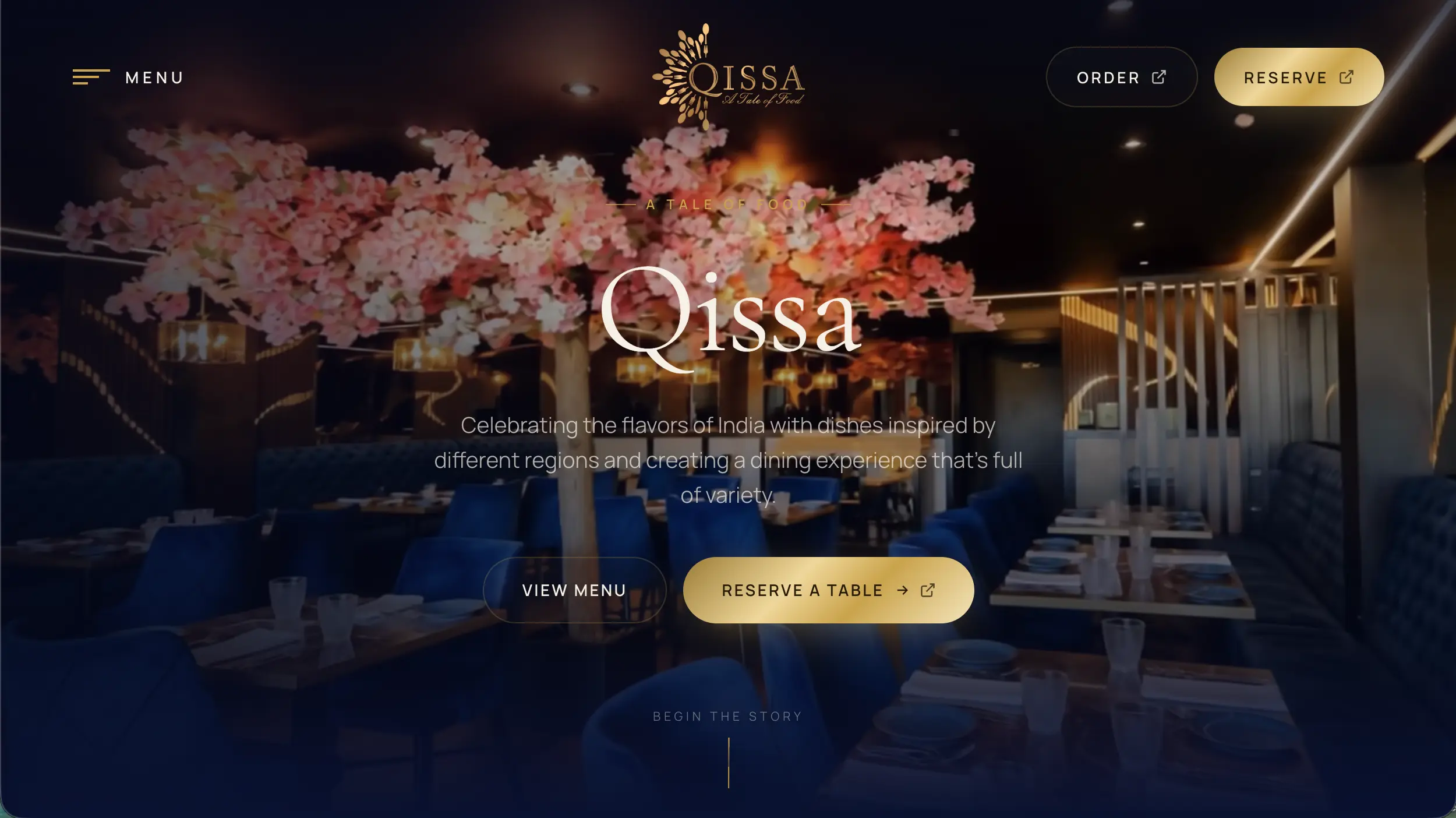
Qissa demonstrates how much a single-location restaurant can accomplish without building a complicated website. Story, food imagery, reviews, hours, address, menu, reservations, and takeaway are all straightforward to access.

Its readable, categorized menu also avoids forcing diners into a separate document just to see dishes and prices.

10

Atelier Crenn

Fine Dining

Visit Website →
Best Immersive Fine-Dining Website
Atelier Crenn restaurant website homepage example
Atelier Crenn

Why it works

Atelier Crenn treats the website as part of the overall fine-dining experience. Photography, restrained copy, chef identity, seasonality, and sourcing create anticipation rather than simply listing dishes and prices.

That immersive approach fits a restaurant where the experience itself is part of the product, while practical guest and reservation information remains available.

What We Learned

What the Best Restaurant Websites Have in Common

Great restaurant websites create appetite and atmosphere, but they also answer practical questions quickly. The strongest sites make it easy to decide where to go, what to eat, and what to do next.

Easy-to-Find Menus

Diners should be able to reach the current menu quickly, especially on mobile devices.

Real Food Photography

Strong images of real dishes, drinks, interiors, and guests can communicate the experience faster than paragraphs of marketing copy.

Reservations or Ordering

Make the primary conversion obvious, whether that is reserving a table, ordering pickup, getting delivery, or joining a waitlist.

Hours & Location

Address, hours, directions, parking or access notes, and location-specific information should be easy to find.

Clear Dietary Information

Where appropriate, dietary labels and allergen information can help diners understand which dishes may fit their needs.

Distinctive Brand Personality

Typography, color, photography, illustration, and copy should feel connected to the actual restaurant rather than a generic hospitality template.

Building Your Own?

How to Build a Restaurant Website Like These

You don't need to copy one of these restaurants. Borrow the ideas that fit your concept: strong real photography, an accessible menu, clear location and hours, a distinctive brand, and a simple path to reserve or order.

1

Lead With the Food

Use strong real photography and concise copy to communicate what makes the restaurant appealing.

2

Make the Menu Easy to Use

Keep menu navigation simple and mobile friendly, with current dishes and pricing where appropriate.

3

Prioritize the Main Action

Reservations, online ordering, delivery, or another primary action should never be hidden.

4

Keep Visit Information Current

Hours, locations, menus, holiday schedules, and policies should be reviewed regularly so diners can rely on the website.

Before You Launch

Restaurant Website Checklist

Use this as a quick starting point when building or reviewing a restaurant website.

Current menu is easy to find
Reservation or ordering action is prominent
Address and opening hours are clearly visible
Real food and restaurant photography is used
Each location has its own useful information when applicable
Menus work well on mobile devices
Prices are current where shown
Dietary or allergen information is available where appropriate
Private dining, catering, or events are easy to find if offered
The visual design matches the restaurant's actual personality

Frequently Asked Questions

Restaurant Website Design FAQs

What should a restaurant website include?

A restaurant website should usually include a current menu, address, opening hours, reservation or ordering information, contact details, real photography, and any important location-specific or guest information.

Should a restaurant menu be a PDF?

A PDF can be useful as an additional option, but an HTML menu is often easier to read and use on mobile devices. The most important thing is that guests can reach the current menu quickly without struggling with zooming or downloads.

Should restaurants show prices online?

In most cases, showing current prices makes the menu more useful and helps guests understand the restaurant before visiting. If prices change frequently, the website should be maintained so outdated information does not remain visible.

What should appear near the top of a restaurant website?

The top of the site should quickly communicate what kind of restaurant it is while making high-priority actions such as viewing the menu, reserving a table, ordering food, or finding a location easy to access.

What makes restaurant photography effective?

Strong restaurant photography should show the actual food, drinks, interior, or atmosphere in a way that accurately represents the dining experience. Real photography generally provides more useful context than generic stock images.